


In today’s competitive tech landscape, startup leaders often face urgent talent gaps as product roadmaps accelerate. Demand for skilled developers is surging: U.S. tech jobs are growing roughly twice as fast as the overall workforce, and 70% of tech professionals report having multiple job offers. Meanwhile, companies globally are turning to outsourced talent – the worldwide outsourcing market reached nearly $770 billion in 2024 and is projected to exceed $900 billion by 2027. Staff augmentation (adding external engineers to your team) lets startups quickly access specialized skills, but the choice of partner is critical. Gartner-style surveys and Deloitte’s research show 80% of organizations plan to maintain or increase their outsourcing spending. To harness this trend effectively, tech leaders must select a provider that aligns with their startup’s needs across multiple dimensions. The following seven factors can guide your evaluation.

1. Rigorous Talent Vetting
The first litmus test is how the provider sources and screens candidates. Given the tight hiring market – where most candidates juggle multiple offers – you need confidence in the quality of developers the company supplies. A reputable staff augmentation firm will be transparent about its recruitment pipeline and involve you in the process: ask to review their technical interview criteria and sample assessments. Ideally, they use coding tests, real-world problem exercises, and behavioral interviews to verify skills and soft skills. For example, they might administer a coding challenge or a project simulation related to your stack. Clients should insist on interviewing the shortlisted developers before finalizing, so each engineer is not only technically qualified but also a cultural fit. In practice, effective vetting might involve collaboration tools (like shared GitHub screens or live coding sessions) even before hire.
Insight: Deloitte finds that with hiring so competitive – 70% of IT candidates receive multiple offers – a strong vetting process is the only way to ensure your augmented staff bring genuine value. Vetting protocols, references, and client testimonials can distinguish a strategic partner from a “body shop.”
2. Technical Expertise & Domain Alignment
You’ll want a partner whose talent pool matches your startup’s technical needs. Look for evidence of experience in your tech stack, tools, and industry domain. For instance, if you’re building AI-driven software, confirm the provider has worked on machine learning or data projects; if it’s fintech, check for developers with finance or security expertise. Market data underscores why this matters: software developers still lead the global IT staffing demand (37.6% of the market), and roles in emerging areas like generative AI are forecast to grow rapidly. A top-tier provider will showcase case studies or portfolio examples beyond buzzwords – actual projects, code samples, or client success stories. They should also demonstrate continuous upskilling: technology evolves fast, so the partner’s training programs and curiosity about new tools are critical. In evaluating expertise, ask about previous projects similar to yours, and request references or portfolio links.
3. Communication & Cultural Fit
Strong technical skills alone aren’t enough – communication and cultural alignment make or break a distributed team’s productivity. Your augmented developers effectively become members of your team, so ensure they speak clear English (or your working language) and understand your company’s values and work style. Vietnam, for example, has made strides in English education: in 2024 it ranked eighth in Asia for overall English proficiency. This suggests that many Vietnamese engineers can collaborate comfortably with Western teams.
Ask candidates about their experience working with international teams, their typical work schedules, and how they handle feedback. Also inquire about the provider’s cultural onboarding: do they train developers on U.S./EU business etiquette, agile processes, or your industry norms? Mismatches here slow projects, so prefer firms that emphasize “soft skills.” Regular check-ins, daily standups on video, and use of collaboration tools (Slack, Jira, etc.) also indicate a mature communication practice. Remember, one or two misunderstandings each week can cascade into delays. When vetting providers, consider small trial tasks or a short pilot to gauge how seamlessly their developers integrate and respond to feedback.
4. Time Zone Overlap & Collaboration
Time zone alignment is a practical concern for real-time collaboration. Excessive lag can stall decision-making and stretch feedback loops. Ideally, your partner offers some working-hour overlap with your team. For North American startups, nearshore locations (like Latin America) provide same-time-zone workdays. Vietnam (UTC+7) is 12–15 hours ahead of the U.S., so plan for some developers to start work in your late afternoon or evening. However, Vietnam’s time zone aligns well with Asia and Europe: for example, a 9 AM EST start in San Francisco is 8 PM in Vietnam, so scheduling morning calls can work. Many Vietnam-based firms also adapt by having flexible-shift teams or designated “shadow hours” to bridge to the U.S. In any case, clarify expected working hours and overlap before signing on. Good providers often structure teams so that at least a portion of the team (or a dedicated liaison) overlaps with clients.
Pro Tip: Establish clear communication protocols (e.g., daily update windows, agreed “quiet hours,” and use of chat tools) to compensate for any time gap. The right partner will be proactive in setting these expectations and tooling to ensure smooth hand-offs.
5. Scalability & Agile Onboarding
Startups’ needs fluctuate rapidly – a sudden funding round or market opportunity may require doubling your team overnight. Your augmentation partner must be able to scale the team up or down quickly. Ask how long it takes them to present qualified candidates and onboard new developers. Top providers can ramp a single developer in weeks, not months. They should also handle administrative lift (setting up dev environments, accounts, legal paperwork) so that engineers start coding ASAP. Flexibility in engagement models is key: can you start with a small pilot and expand seamlessly? What happens if a developer leaves – do they guarantee a swift replacement?

This agility is now a strategic imperative. One survey found that, alongside cost reduction, “skilled talent and agility” are major drivers for outsourcing. In practice, this means your partner should let you pause or adjust resources with minimal penalty. For example, if a quarter’s goals change, ensure you’re not locked into rigid team sizes. Look for transparent policies on scaling: some firms offer bench teams or “talent pools” so vacancies fill instantly. An experienced partner will treat your team as a dynamic extension of your organization, not a static arrangement.
6. Cost Structure & Transparency
Cost will always factor into a startup’s decision. Vietnam often shines here: Vietnamese developers’ salaries are roughly a tenth of the global average, offering serious budget relief for U.S./EU startups. However, focus not just on hourly rates but on overall value. Cheaper talent can still be expensive if quality is low or turnover is high. Ensure the company’s pricing model is transparent (hourly, project-based, or hybrid) and that all costs (taxes, benefits, overhead) are clear upfront. Watch for red flags like “one-size-fits-all” pricing that doesn’t account for skill level or project scope.
It’s also wise to align incentives: some providers may offer better rates on larger teams or longer commitments, so balance flexibility against discounts. Double-check the contract terms regarding IP ownership, confidentiality, and termination clauses. A partner committed to a long-term relationship will be open about these terms. As a reference, note that global outsourcing remains cost-driven: startups cite the affordability of regions like Vietnam as a top advantage. But the cheapest provider isn’t always the best partner; transparency and predictability in pricing can save you headaches later.
7. Security, IP & Long-Term Partnership
For startups, protecting intellectual property and ensuring continuity are critical. Verify that the provider follows industry-standard security practices (data encryption, secure development processes, NDAs, and if relevant, ISO/PCI certifications). Ask about how they segregate client codebases and handle confidential information. Equally important is developer retention. A high churn rate means you constantly re-onboard new people, losing momentum. In interviews, ask about the typical tenure of their staff and what they do to keep developers motivated (training, company culture, career growth).
Beware that many companies struggle to manage extended teams: Deloitte notes only about 20% of executives say their vendor-management office actually governs these extended workforce arrangements. In practice, this means you should demand clear governance. Who will be the day-to-day point of contact? How are issues escalated? Does the provider regularly solicit feedback and adjust team composition? The best firms view themselves as long-term partners, not one-off vendors. They invest in understanding your business goals so that, over time, the augmented team feels like an integral part of your startup.
Client Success: A U.S. fintech startup, pressed for time and unable to hire locally, chose a Vietnam-based augmentation partner after evaluating the above factors. By ensuring transparent vetting and efficient onboarding, they added four senior developers in just six weeks. These engineers worked closely (via daily virtual standups and overlapping hours) with the founding CTO. As a result, the team accelerated its product roadmap by 40%, reaching a beta launch two months ahead of schedule.
Conclusion: Partnering for Growth
Choosing a staff augmentation partner is a strategic decision that can make or break your development roadmap. To recap, CTOs should weigh factors like rigorous vetting processes, proven technical expertise, excellent communication, time-zone alignment, scalability, cost efficiency, and security. Vietnam-based providers (such as DigiEx Group) often excel on many of these fronts: Vietnam’s talent pool is growing fast and cost-effective, its tech workforce ranks near the top in English skills, and firms there are accustomed to working with Western startups. By partnering with a Vietnam- and AI-focused team, you can tap 20+ years of IT expertise and double down on innovation without burning your budget.
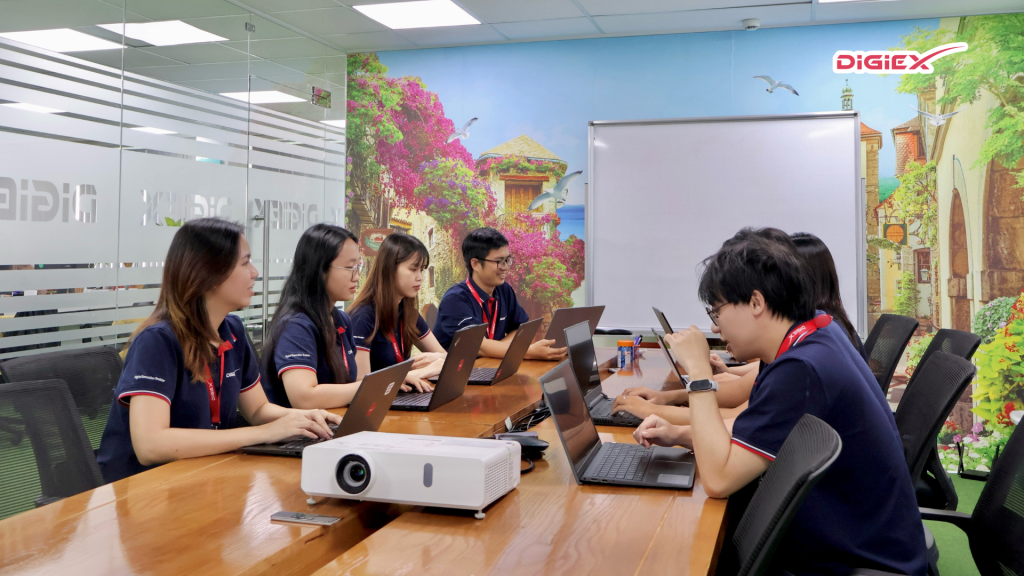
Ultimately, the right augmentation company will operate as an extension of your startup. If you apply these criteria and engage a forward-thinking partner, you’ll be well-positioned to scale your software development efficiently.
Ready to build a stronger team? DigiEx Group’s top-tier engineers and transparent engagement model could be the solution your startup needs. Book a meeting with our experts to explore how AI-powered software development teams can accelerate your growth.
About DigiEx Group
DigiEx Group is a leading Tech Talent Hub and AI-driven Software Development company in Vietnam, backed by over 20 years of global IT experience. Our team, with 2 Tech Development Centers, 150 in-house engineers, and a network of 50+ domain experts, tailors every engagement to your unique roadmap with a suite of services:
- Tech Talent Services: Rapid access to Vietnam’s top 2,000+ pre-vetted engineers via our Talent Hub platform.
- Custom Software Development: End-to-end product delivery for web, mobile, SaaS, and enterprise systems.
- AI Consulting & Development: Design and implementation of AI Agents and automation solutions.
- Neobank & Fintech Solutions: Cutting-edge digital banking and payment platforms.