


Meet the Startup Race Against Time
In today’s hyper-competitive tech landscape, early-stage startups often face intense pressure to launch products quickly. Yet hiring top software talent can take weeks or even months. With tech roles in high demand and 70% of developers juggling multiple offers, the traditional hiring playbook can leave startups stalled. The good news: savvy founders are accelerating team-building by leveraging staff augmentation and streamlined hiring. In just 30 days, you can stand up a full development team – if you follow a structured, resourceful roadmap. This guide shows how, step by step, drawing on industry insights and real cases.

1. Define Your Must-Have Roles
First, clarify your needs and timeline. Startups should list only the essential roles to kickstart the project – for example, a lead developer/architect, backend and frontend engineers, a QA/tester, and a project coordinator. Avoid long wish-lists of skills; instead, separate “must-have” versus “nice-to-have” requirements. A focused scope prevents delay: one recruiting firm notes that unclear job specs often flood pipelines with the wrong candidates. Take time to align with your co-founders or advisors on the roadmap and priorities. This “talent blueprint” session ensures everyone agrees on who you need and why.
Key takeaway: Clearly defined roles and priorities prevent wasted effort. Use your first few days to map out headcount by specialty and project milestones.
2. Partner with a Global Talent Provider
With roles in hand, immediately engage an IT staff augmentation company or offshore talent hub. These partners maintain pre-vetted developer pools and handle hiring logistics, slashing sourcing time. For example, a US SaaS startup partnered with an offshore team (through a Vietnam-based provider) and had 6 developers and testers shortlisted within 3 days. In-house recruiters rarely match this pace. Industry studies confirm it: while standard hiring takes 41–60 days or more, augmentation can “compress this to just days”. The secret is scale and specialization – firms with thousands of candidates ready to interview.
- Talent Pools & Reach: Augmentation hubs tap global talent in markets like Vietnam, Eastern Europe, or Latin America, where many developers have AI and cloud skills. This broadens your reach beyond local scarcity.
- Pre-vetting and Matching: Good providers screen and test their engineers upfront. They can match your tech stack (e.g., Node/Python, React/TypeScript, DevOps, AI/ML) and culture needs, giving you an initial shortlist in days.
3. Streamline Candidate Screening
Once you have a shortlist, move fast on interviews. Traditional hiring often stalls at each stage; instead, consolidate steps. For instance, rather than separate HR calls, technical screens, and manager interviews spread over weeks, schedule back-to-back sessions. Use standardized assessments or coding tests to quickly eliminate mismatches. TechRepublic notes that augmented staff often need 38% less training due to being “role-ready, so focus on real coding challenges: whiteboard exercises, pair programming, or take-home assignments that reflect your product. Keep interview rounds lean: one technical deep-dive and one cultural fit chat might suffice.
Tip: Leverage modern tools. AI-powered recruiting software or platforms can automatically shortlist candidates by skill.
4. Negotiate and Close Quickly
With the right candidates identified, speed up offers and negotiations. In a hot market, candidates have options – 70% had multiple offers in their last job search – so move promptly. Your augmentation partner often handles initial compensation discussions based on market rates. If you negotiate in parallel (some startups do multiple offers a day), you can lock in commitments within a week. Work closely with the provider to align on employment structure: many use Employer-of-Record models to simplify contracts and compliance.

Cost advantage: By hiring through an augmentation firm, you can often save 30–50% versus local in-house hiring. These savings come from lower salary rates abroad and reduced overhead (no office or benefits costs for these roles).
5. Onboard and Kickstart
With contracts signed, dedicate the last week to rigorous onboarding. Provide new hires with access to code repositories, tools (Git, Jira, Slack, etc.), and clear documentation. Schedule knowledge-transfer sessions with any current team members. Align daily stand-ups or check-ins – ideally overlapping time zones – to integrate the new developers into your workflow from Day 1. In a successful case, one startup had a 60% sprint completion rate pre-augmentation; after onboarding its offshore team (just 10 days in), sprint success jumped to 95%. Aim for similar quick wins: perhaps have your first new line of code by day 3, first feature delivered by mid-week 3, and full team integration by day 30.
Integrating offshore or remote developers requires structured onboarding and communication. Teams using a dedicated platform (daily standups, shared docs) saw sprint completion jump from 60% to 95% after adding augmented staff.
Overcoming Challenges & Best Practices
- Cultural Fit: Even in a rapid hire, don’t skip a quick culture check. A short call about company values or a trial project can reveal alignment. Our team at DigiEx Group emphasizes English proficiency and agile work culture to blend seamlessly with US/EU clients.
- Legal & Compliance: Reputable augmentation firms manage payroll, taxes, and labor laws via EOR setups. Ensure they carry certifications (ISO, SOC2) to protect your IP and data.
- Retention Strategy: Fast hiring isn’t just about speed – it’s also about keeping talent engaged. Plan career development or upskilling (especially in AI/ML) to avoid quick turnover. Staff augmentation can reduce training costs up to 38%, but ongoing coaching ensures your team stays with you through product milestones.
Conclusion & Next Steps
As startups race to innovate, having the right tech team yesterday can feel like a luxury. By following a deliberate 30-day plan—leveraging staff augmentation, pre-vetted global talent, and lean hiring tactics—you can turn that luxury into reality. This approach not only saves time but also costs: companies report 30–50% lower expenses with augmentation. It keeps founders in control of the roadmap while avoiding the typical delays of headcount hiring.
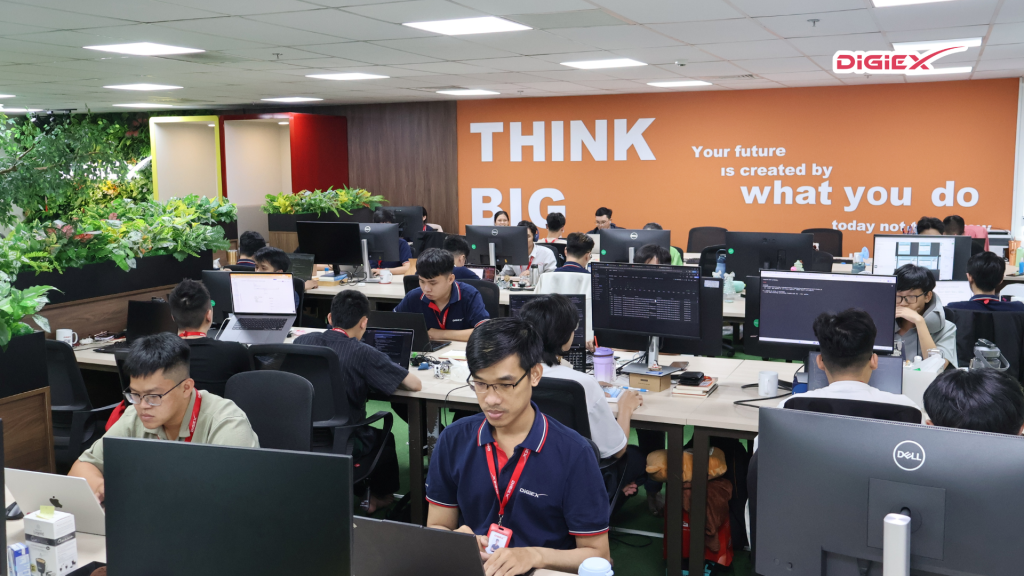
Building your dream team quickly also primes you for future growth. Once the MVP is live and validated, you’ll already have a core team attuned to your vision. At DigiEx Group, our 20+ years of global IT experience and Vietnam-based talent hub help startups tap into skilled, AI-savvy engineers fast – often assembling teams in just weeks. If you’re ready to accelerate your startup’s development without the recruitment headache, consider how a partnered approach (like ours) can amplify speed and quality. Your next product sprint shouldn’t wait – start building now!
Ready to build a stronger team? DigiEx Group’s top-tier engineers and transparent engagement model could be the solution your startup needs. Let’s schedule a meeting to explore how our AI-powered software development teams can accelerate your growth.
About DigiEx Group
DigiEx Group is a leading Tech Talent Hub and AI-driven Software Development company in Vietnam, backed by over 20 years of global IT experience. Our team, with 2 Tech Development Centers, 150 in-house engineers, and a network of 50+ domain experts, tailors every engagement to your unique roadmap with a suite of services:
- Tech Talent Services: Rapid access to Vietnam’s top 2,000+ pre-vetted engineers via our Talent Hub platform.
- Custom Software Development: End-to-end product delivery for web, mobile, SaaS, and enterprise systems.
- AI Consulting & Development: Design and implementation of AI Agents and automation solutions.
- Neobank & Fintech Solutions: Cutting-edge digital banking and payment platforms.