

Nearly 98% of your Marketing Qualified Leads (MQLs) will never result in closed business. That is not a pessimistic guess; it is a documented industry reality for traditional B2B organizations. If your growth strategy relies on chasing people who downloaded a whitepaper or opened an automated email, you aren’t just fighting an uphill battle, you’re likely wasting 90% of your acquisition budget on “Zombie Users” who will never convert.
The B2B buying journey has undergone a fundamental shift toward self-service discovery. Modern buyers are no longer willing to “Talk to Sales” for three weeks just to see a demo; they want to put their hands on the tool first. This shift has birthed a new, high-performance metric: the Product-Qualified Lead (PQL).
What Is a Product-Qualified Lead?
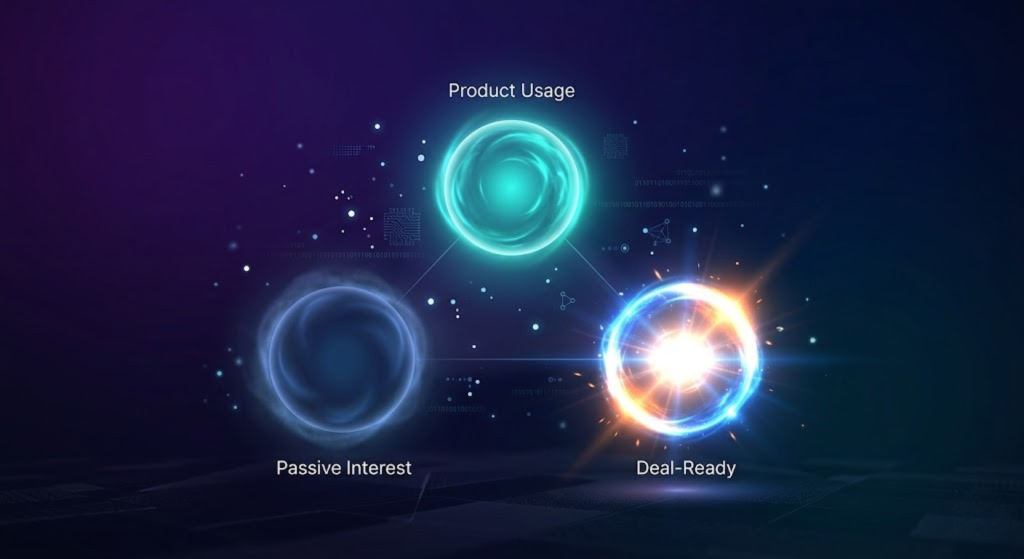
A Product-Qualified Lead (PQL) is a prospective customer who has already experienced meaningful value from a product through a free tool, trial, or freemium model, thereby signaling a high intent to purchase based on actual usage data..
Unlike an MQL, which is based on passive interest (reading content), a PQL is based on active participation (using functionality). To understand how this fits into your current stack, consider the following comparison:
PQLs vs. MQLs vs. SQLs: The 2026 Comparison Table
| Feature | Marketing Qualified Lead (MQL) | Product-Qualified Lead (PQL) | Sales Qualified Lead (SQL) |
|---|---|---|---|
| How it’s defined | Interaction with marketing content (e.g., ebooks, webinars). | Meaningful usage of the actual product or micro-tool. | Vetted by sales as having budget, authority, and need. |
| What qualifies the lead | Email opens, form fills, or page visits. | Reaching an “Aha!” moment or usage threshold. | Direct confirmation through a discovery call. |
| Trust signal | Curiosity or search for information. | Verified value and functional fit. | Expressed readiness to negotiate a contract. |
| Typical conversion rate | 1% – 10% from lead to won deal. | 15% – 30% from PQL to paid customer. | Varies; typically high once accepted by AE. |
| Sales cycle length | Long (requires heavy education and nurturing). | Short (the user already knows the value). | Final stage (focused on legal and procurement). |
| Best suited for | Awareness stage/Complex enterprise products. | Product-Led Growth (PLG) and Micro-tool models. | Closing high-value, high-complexity deals. |
Why PQLs convert at 2–5× the rate of MQLs
The data consistently shows that PQLs are far more valuable than traditional leads. According to OpenView Partners, PQLs convert at extremely high rates, often 15-30%, compared to the low single digits for MQLs.
The underlying reason is simple: trust. A PQL has already crossed the “value gap” before they ever talk to your sales team. While an MQL conversation is a pitch (“Let me tell you why this works”), a PQL conversation is an optimization (“I see you’re already doing X; let’s talk about how to achieve Y at scale”). This shifts the sales rep from a “solicitor” to a “trusted advisor”.
Key Takeaway: PQLs outperform MQLs because they replace theoretical interest with proven value, allowing sales teams to focus on accounts that have already “bought in” to the product’s core utility.
Why PQLs Matter More Than Ever in 2026
The B2B marketing playbook that worked in 2015 is officially broken. We have entered the “Show, Don’t Tell” era.
Buyer behavior shift: Self-serve discovery before sales engagement
Modern B2B buyers are effectively “consumers at work”. They have been conditioned by apps like Spotify and Zoom to expect results instantly. According to Gartner, AI agents will intermediate 90% of B2B buying by 2028, pushing procurement toward machine-readable products and autonomous transactions. If your product is hidden behind a “Book a Demo” form, you are invisible to the modern buyer who wants to self-educate and trial before engaging a human.
The trust deficit in B2B: Buyers trust demos over decks
There is a massive credibility problem in B2B marketing. Cold outreach, gated PDFs, and branded webinars have diminishing returns because they are vendor-controlled environments. A working tool—even a small one—is categorically more trusted than a slide deck. When a buyer uses vCodeX — part of the DigiEx Group ecosystem, they aren’t listening to a promise about AI; they are watching the code generate in real-time. That experience builds a level of trust that no marketing campaign can match.
How free tools create PQLs for service businesses, not just SaaS
A common misconception is that the PQL model is only for SaaS companies. At DigiEx Group, we have proven that service firms can, and should generate PQLs by building free micro-tools as “Engineering as Marketing”.
Instead of a service firm asking for a $50k pilot, they launch an AI agent that solves a generic piece of the client’s workflow for free. This tool acts as a Product Lead Magnet (PLM). The usage of that tool provides a PQL signal that opens a natural “custom version” conversation. You aren’t selling a project; you are expanding a tool they already use.
Key Takeaway: The PQL model is a strategic imperative in 2026 because it aligns your go-to-market motion with the buyer’s demand for self-serve proof of value.

How to Define PQL Criteria for Your Business
You cannot track PQLs if you don’t know what “value” looks like for your user. Defining a PQL is both an art and a science, requiring you to find the behaviors that correlate with an upgrade.
Usage-based signals: What actions indicate real interest?
Not all usage is equal. A user who logs in once and wanders around is a “Zombie User” ; a user who completes a core task is a potential customer. High-intent signals include:
- Completing a core workflow: Running a full report or generating a specific output.
- Frequency of use: Returning to the tool three or more times in a single week.
- Inviting colleagues: This is the ultimate signal of trust and expansion potential.
- Integration: Connecting the tool to their own data sources (e.g., Slack or a CRM).
Engagement thresholds: Frequency, depth, feature exploration
Setting thresholds prevents your sales team from being overwhelmed by low-intent users. For example, at Visible, the PQL threshold is connecting 2+ data sources and inviting a colleague. At Slack, it was famously reaching a limit of 2,000 messages.
Building a PQL scoring model
You don’t need a data science team to start. A simple framework like the one below can be implemented in a week:
- Identity (40% Weight): Does the user fit your Ideal Customer Profile (ICP)? (e.g., Business email, right job title, company size) .
- Breadth (30% Weight): How many different features have they tried?.
- Depth (30% Weight): Have they hit a usage limit or reached an “Aha!” moment?.
| Score Range | Action |
|---|---|
| 0–50 | Nurture with automated product tips. |
| 51–80 | Trigger a “Product Specialist” or “Sales Assist” reach-out. |
| 81–100 | Immediate Sales Rep (AE) notification for a high-value purchase discussion. |
From PQL to Pipeline: The Conversion Playbook
Defining a PQL is useless if your sales team treats them like a cold lead. The conversion playbook requires a consultative, data-informed approach.
When to reach out: Timing triggers
Timing is the difference between being helpful and being creepy. Timeliness matters more with PQLs than any other lead source. Trigger outreach when a user:
- Hits a capacity limit.
- Completes a “Golden Feature” usage for the first time.
- Adds 3+ users from the same domain (signaling a Product-Qualified Account, or PQA).
How to reach out: Consultative, not salesy
Your sales reps must become trusted advisors. They shouldn’t pitch features; they should solve the user’s specific friction points.
- The Bad Approach: “I saw you signed up for our tool. Do you have 15 minutes for a demo of the enterprise version?”.
- The PQL Approach: “I noticed you’ve used vCodeX to refactor three legacy modules this week. Would it be helpful to see how we can automate that across your entire repo with a custom integration?”.
The “custom version” conversation: Bridging free tool to paid engagement
For a product studio like DigiEx Group, the free micro-tool is the generic solution. The paid engagement is the bespoke solution. Frame the conversation around the client’s specific data, their security requirements, and their complex integrations. The free tool proves you can do it; the paid contract lets you do it for them.
Measuring PQL Performance
If you can’t measure it, you can’t optimize it. To track your PQL engine, focus on these four metrics:
- PQL Volume: The raw number of users who hit your PQL threshold each month.
- PQL-to-SQL Rate: The percentage of PQLs that your sales team accepts as legitimate opportunities. Benchmark: Should be >50%.
- Time-to-close: deal velocity for PQLs vs. MQLs. PQLs should close significantly faster because the education phase is already done.
- Average Deal Size: PQLs often lead to “land and expand” models. While the initial deal may be smaller, the Net Dollar Retention (NDR) is typically 130–150%.
How to set up basic PQL tracking
You don’t need a complex tech stack to start. The bare minimum includes:
- Tool Analytics: Track events with tools like Amplitude or Mixpanel.
- CRM Integration: Use a tool like Hightouch or Pocus to send usage signals directly into Salesforce or HubSpot.
- A Simple Dashboard: Visualize which users are hitting the “Aha!” moment vs. which are churning.
What we’ve seen at DigiEx Group: In our experience, leads generated through our micro-tool portfolio, like those using vCodeX, DigiEx Group’s AI coding agent, have a time-to-close that is roughly 40% shorter than leads acquired through traditional cold outreach. This is because the “proof” phase of the sales cycle happens autonomously before the first meeting.
“In the AI era, code is cheap but confidence is expensive. PQLs are the only way to prove to a skeptical buyer that your AI agent actually works in their specific environment.”
Steve Pham, CTO at DigiEx Group

Frequently Asked Questions
What tools do I need to track PQLs?
At the start, you only need three things: an analytics tracker (like Amplitude) to see what users are doing, a CRM (like HubSpot) to store lead info, and a way to connect them. As you mature, you can add specialized Product-Led Sales platforms like Pocus or Endgame to help your sales reps prioritize their daily task lists based on real-time usage signals.
How many PQLs should I expect per month from a micro-tool?
This depends on your top-of-funnel traffic. A healthy micro-tool should convert 3-6% of visitors to signups, and approximately 20–40% of those signups should reach activation (PQL status). If you have 1,000 visitors, you might expect 60 signups and roughly 15-20 high-quality PQLs.
Can service businesses, not just SaaS companies, use the PQL model?
Absolutely. Service businesses can use engineering as Marketing to build small, functional AI agents or calculators that solve a specific problem for their target audience. When a user interacts with that tool, it creates a PQL signal that the service firm can use to offer a more comprehensive, custom-built solution.
See PQLs in Action
Generating high-quality leads shouldn’t feel like pulling teeth. By leveraging Engineering as Marketing and tracking PQLs, you can build a growth engine that scales without adding massive sales headcount.
The fastest way to understand this model is to see it in the wild. We’ve built a portfolio of AI-native tools that do the heavy lifting for us, converting curious users into long-term partners every day.